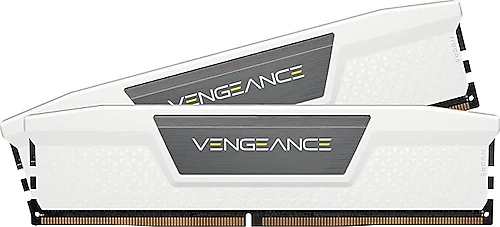
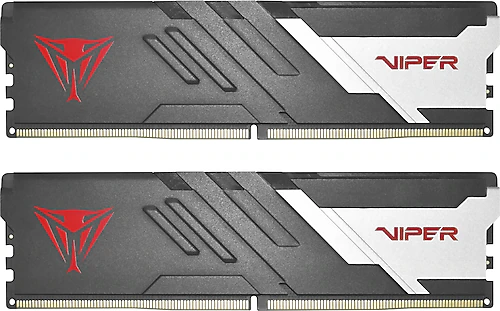
The Corsair Vengeance CMK32GX5M2E6000Z36W and Patriot Viper Venom PVV532G600C30K target similar desktop systems: 32 GB of DDR5 memory, two 16 GB modules, and a speed of 6000 MHz. That means details such as timings and design—not capacity or frequency—are the main considerations. Patriot offers tighter timings on paper with CL30, while Corsair lists a heatsink design among its features.
Capacity and speed: The basics are the same
Both kits offer 32 GB of capacity in a 2x16 GB configuration and belong to the DDR5-6000 class. This shared setup makes both products suitable for similar needs, including gaming, everyday multitasking, and a range of productivity tasks. For those who like to keep a browser or chat app open while gaming, or work across multiple applications, 32 GB can provide plenty of memory.
Both products also share a two-module configuration. So it would be incorrect to choose one on the assumption that it offers more capacity or a higher frequency; those figures match in the available information. The main technical difference is latency: Corsair is listed at CL36, while Patriot is listed at CL30.
What does the difference between CL30 and CL36 mean?
At the same 6000 MHz frequency, CL30 is a lower-latency timing than CL36. Taken together, these figures give Patriot the tighter timings on paper. If you’re building a performance-focused system where memory latency matters, this may be the most notable reason to choose between the two kits.
However, this difference shouldn’t be taken to mean a major performance boost in every game or application. The actual benefit can vary depending on the processor, application, and rest of the system; the CL rating alone isn’t enough to predict how a system will perform. It’s reasonable to regard CL30 as a meaningful technical advantage for Patriot, but not as the sole deciding factor for every user.
Design and usage priorities
The specific design feature noted for the Corsair Vengeance is that its modules have heatsinks. Corsair is the clearer choice if you want a heatsink design or prefer that look for your system components. In the Patriot Viper Venom’s case, its standout feature isn’t a heatsink but its CL30 timing alongside a speed of 6000 MHz.
Patriot is described as DDR5 DIMM memory for desktop computers. For both products, checking compatibility with a DDR5-compatible motherboard and processor should be part of the buying decision. For Patriot, enabling the 6000 MHz speed in your system may depend on the memory profile in the BIOS and platform support. If you want to use the rated speed, make sure your motherboard and processor support that setting.
Which one is better suited to your needs?
If your priority is lower latency at the same 32 GB capacity and 6000 MHz speed, the Patriot Viper Venom is the more direct choice. CL30 is the kit’s main distinguishing feature, especially for users building performance-focused desktop PCs who consider memory timings when choosing components.
If you prefer modules with heatsinks and consider CL36 sufficient for your system, the Corsair Vengeance is a strong alternative. Both kits’ shared capacity and speed can meet the needs of everyday use, gaming, and multitasking. In that case, the choice comes down to whether you value Patriot’s tighter timings or Corsair’s stated heatsink design more.
Final verdict
The Corsair Vengeance and Patriot Viper Venom share the same basics in capacity, module configuration, and frequency. In short, the Patriot stands out for its CL30 timings, while Corsair may appeal for its heatsink design. Choose the Patriot Viper Venom if timings are your priority, or the Corsair Vengeance if a heatsink design matters more to you. Either way, check that your system supports DDR5 and is compatible with the 6000 MHz setting.