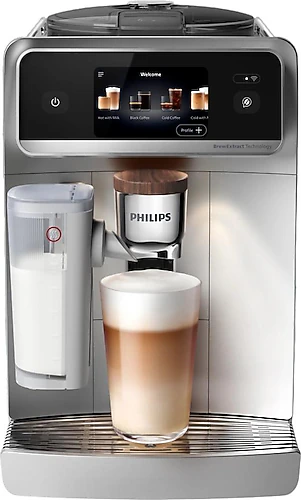
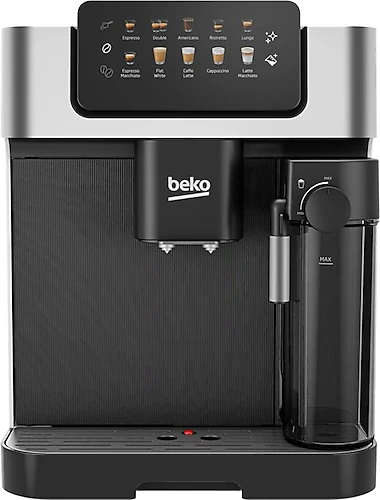
The Philips 8000 Series LatteGo Pro EP8757/20 and Beko CaffeExperto CEG 7304 X are countertop models that grind beans and automatically prepare a range of coffees. Both have touchscreen controls, milk-based drinks and a dual coffee spout that helps prepare two cups at once. The difference becomes clear between Philips, with its larger capacities and customization options, and Beko, which has a milk container and a hot chocolate option.
Shared features and different priorities for everyday use
Neither machine is limited to espresso: both offer Americano, caffe crema, cappuccino, latte and lungo. With a built-in grinder, there’s no need to grind coffee separately, while automatic operation lets the machine handle the preparation. The dual coffee spout is useful on both models if you want to serve two cups in one preparation.
Philips also includes espresso on its menu, and its adjustable coffee spout helps accommodate different cup sizes. Beko’s standout menu difference is its hot chocolate option. If you want to prepare this drink as well as coffee with the same machine, Beko offers more variety.
Grinding settings and customization
Philips has 12 grinder settings, while Beko has 13. One extra setting doesn’t automatically mean better coffee; both models give you options for changing the grind. Philips also offers coffee strength adjustment and customizable use. These controls can make a meaningful difference if you want to tailor your drink to your preferences.
Both machines let you select drinks using a touchscreen. Beko’s screen is described as digital, and Philips also has touchscreen controls. In terms of basic ease of use, they take a similar approach. The choice depends on how much importance you place on adjustments such as coffee strength beyond simply selecting a drink on the screen.
Capacities and countertop space
Philips has a 1.9-liter water tank and a 275-gram bean hopper, both larger than Beko’s 1.5-liter water tank and 160-gram bean hopper. This difference in capacity may be useful in a household that makes coffee more often or prefers to refill the tanks less frequently. Of course, how often you need to refill them depends on consumption and the drinks you prepare.
Beko also has a 0.6-liter milk container. You can use it to prepare milk-based drinks such as cappuccino and latte; if you make these drinks often, consider how you’ll clean the container after use and where you’ll store it. Philips also supports milk-based recipes with its milk frother.
Beko measures 19.5 cm wide, 41 cm deep and 32 cm high. Its width may be an advantage on a narrow countertop, but it’s important to plan for its depth and the space needed to access the tanks. Philips weighs 9.7 kg, compared with 7.5 kg for Beko. Beko’s lighter weight may make it easier to move, but it’s not possible to compare the machines’ overall countertop footprint without making assumptions about Philips’s dimensions, which aren’t provided here.
Maintenance features and everyday care
Both models have a descaling feature. Philips also includes the AquaClean system and automatic shutoff; the coffee grounds container and drip tray are part of the machine’s everyday routine, too. Along with its maintenance features, cleaning these parts is part of regular care.
With Beko, the milk container needs to be cleaned after preparing drinks with it. If convenience when making milk-based coffees matters to you, include this step in your routine. For both models, follow the product instructions for maintenance and cleaning.
Which one should you choose?
If you prioritize larger water and bean capacities, coffee strength adjustment, an adjustable coffee spout and features such as AquaClean, the Philips 8000 Series LatteGo Pro EP8757/20 is a better fit. In households where several people have different preferences, its customization options and larger tanks may make the daily routine easier.
The Beko CaffeExperto CEG 7304 X stands out with its hot chocolate option, 13 grind settings and separate milk container. Beko may suit you if you’ll use that drink option, want to prioritize the machine’s width for a narrower countertop, or prefer a lighter appliance. Both models support milk-based coffee and preparing two cups at once, so the main deciding factors are their shared features’ less than the tank capacity, customization options and Beko’s additional drink option.