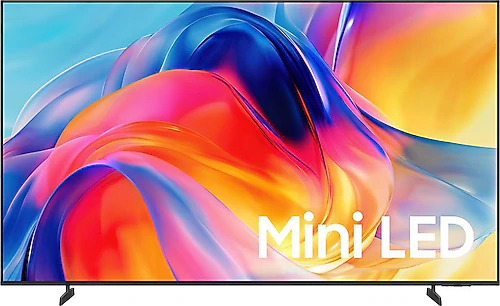
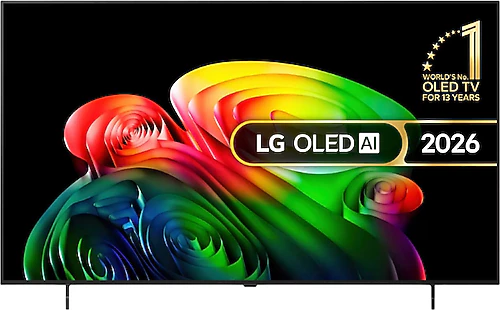
The Samsung 65M70H and LG OLED65B65LA share the same basic foundations: both are 65-inch, 4K smart TVs with built-in satellite tuners. The main differences are their display technologies and refresh rates. Samsung’s Mini LED and 60 Hz setup is geared toward movies and everyday viewing on a large screen, while LG pairs OLED picture quality with 120 Hz and VRR, making it a stronger option for gaming too.
Picture characteristics: Mini LED or OLED?
Both TVs have a resolution of 3840 x 2160, providing a similar foundation for detailed images with compatible 4K content. The difference lies in how they produce those images. The Samsung 65M70H’s Mini LED backlighting uses many small LEDs. This approach aims to deliver more controlled lighting in movie scenes containing both dark and bright areas. Combined with its 65-inch screen, it makes the TV a suitable option for watching movies and shows in the living room.
On the LG OLED65B65LA, each pixel produces its own light. This helps keep blacks dark and makes the distinction between bright objects and dark areas more pronounced, especially when watching movies in a dim room. If contrast in dark scenes matters to you, LG’s OLED characteristics are a strong reason to choose it. Viewing from different angles can also be useful when watching movies or sports with family.
Both models support HDR10 and HDR10+, so HDR options are available with compatible content. No specific peak brightness value is provided for the LG, so it would not be appropriate to draw a definitive conclusion about HDR performance in very bright rooms. If your living room gets daylight, consider the screen’s placement and reflections from windows too. Those who prioritize contrast in dim surroundings may prefer the LG, while those who favor Mini LED picture technology may lean toward the Samsung.
Refresh rate is the deciding factor for gaming
Both TVs support VRR. With compatible gaming hardware and content, VRR can help match the screen’s refresh rate to the game’s frame rate. However, the Samsung 65M70H has a 60 Hz refresh rate, while the LG OLED65B65LA has a 120 Hz refresh rate. This gives the LG a clear advantage for users who want smoother motion and have a compatible gaming system.
The Samsung also has a game mode and VRR, making it a capable choice for console or casual gaming. However, its 60 Hz limit is an important consideration for players who want to benefit from a higher refresh rate. If gaming is not a priority, this difference may matter less to you; for movies, shows and everyday viewing, the choice between the models depends more on their picture characteristics.
Connectivity and smart TV experience
Samsung uses Tizen, while LG uses webOS. Both offer Wi-Fi, Ethernet and screen mirroring, and both models have Bluetooth and a built-in satellite tuner. Their tuners can reduce the need for a separate receiver box for satellite broadcasts, helping keep your setup tidy. Interface preferences depend on personal habits, so rather than choosing a definitive winner based only on platform names, consider how you use your TV day to day.
LG offers more connectivity: the OLED65B65LA has four HDMI and two USB ports, compared with three HDMI and one USB port on the Samsung. If you plan to connect several game consoles, streaming devices or other video sources at once, LG’s additional HDMI port may be useful. The two USB ports also offer more flexibility if you plan to use multiple USB devices. The Samsung is specified with Bluetooth 5.3 alongside Ethernet and Wi-Fi, while the LG has an optical audio output.
Choosing based on setup and priorities
Both screens are 65 inches, so it’s important to make sure you have enough space for the TV and viewing area. Their wall-mounting measurements differ: the Samsung supports 200 x 200 mm VESA, while the LG supports 300 x 300 mm VESA. Check the dimensions for your model when selecting a mount. The Samsung’s listed body dimensions are 1441 mm wide, 882.2 mm high and 222 mm deep; check your wall or TV stand space accordingly before installation.
The Samsung 65M70H is a better fit for users who want Mini LED picture technology, Tizen, a satellite tuner and everyday connectivity in one TV, and are satisfied with 60 Hz. The LG OLED65B65LA makes more sense for those who prioritize OLED contrast in dark scenes and smoother gaming at 120 Hz. Users who want a TV for both movies and gaming, and have compatible gaming hardware, may especially benefit from the LG’s combination of features.
Final verdict
If you prefer Mini LED picture technology and will mainly use your TV for movies, shows and broadcasts, the Samsung 65M70H is a strong choice. If OLED contrast, a 120 Hz refresh rate, VRR and more HDMI/USB connections matter more to you, the LG OLED65B65LA is a better fit. In short, beyond their shared 65-inch 4K foundation, the choice comes down to Samsung’s Mini LED approach versus LG’s combination of OLED and a higher refresh rate.