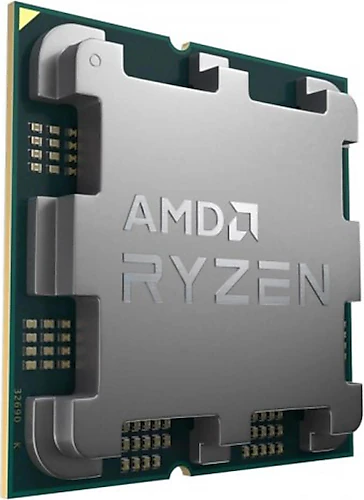
The AMD Ryzen 7 7800X3D is one of the processors in the Ryzen 7 family developed for users who want to build a modern desktop computer, particularly those who prioritize gaming performance. The model offers 8 cores and 16 threads, operates at a processor speed of 4.20 GHz, and can reach a maximum turbo speed of 5 GHz when needed. Its 96 MB of cache, DDR5 memory support, and PCIe 5.0 connectivity also make the processor well suited for use with next-generation system components.
A balanced design for gaming and everyday use
The Ryzen 7 7800X3D’s 8 cores and 16 threads provide a strong foundation for users who keep different applications open at the same time rather than only running games. Those who want to use voice chat, a browser, recording software, or companion applications while gaming can benefit from its multithreading support. This design makes the processor suitable for the heart of a powerful general-purpose desktop computer without being limited to a single use case.
The model’s positioning as a gaming-focused processor appeals to users looking for an option compatible with gaming systems that require high processing power. Its 5 GHz maximum turbo speed allows the processor to increase its speed for tasks that require brief bursts of high performance under supported operating conditions. However, the turbo value does not mean that all cores run continuously at the same speed; it should be considered a maximum speed that varies according to system load and operating conditions.
96 MB of cache and modern platform support
The processor’s 96 MB of cache is an important technical feature that helps provide faster access to frequently used data within the processor. Particularly when building a gaming-focused system, a high cache capacity stands out as one of the factors that helps the processor manage data flow efficiently. This is one of the features supporting the Ryzen 7 7800X3D’s gaming-oriented character.
The model uses the AM5 socket. Therefore, an AM5-compatible motherboard must be chosen when selecting a motherboard. DDR5 memory support provides a suitable foundation for users who want to build their system around the next-generation RAM standard. The specified RAM speed is 5200 MHz, while the maximum RAM capacity is 128 GB. This capacity provides ample room not only for gaming computers but also for productivity and multitasking scenarios with higher memory requirements.
PCIe 5.0 support is another platform feature that allows the processor to be used with next-generation expansion components. When selecting storage and other PCIe components, it should be remembered that the motherboard and the hardware being used must also support the relevant standard. Even so, this support makes it easier for users building a new system to choose current connectivity technologies.
Integrated graphics, virtualization, and overclocking
The Ryzen 7 7800X3D includes an integrated graphics unit. This feature can be practical for obtaining basic video output without a graphics card. However, integrated graphics support should not be interpreted as replacing the gaming performance provided by a dedicated graphics card. For those who do not use an external graphics card, it provides additional flexibility for video output and basic use.
Virtualization support is valuable for users who want to use virtual machines or similar virtualization-based work environments on their computer. The processor’s overclocking support also provides an additional option for experienced users who want to customize their settings. Since the motherboard, cooling, and system settings must be evaluated together when overclocking, this feature is primarily suited to users who configure their hardware in detail.
Power and cooling planning
The model’s specified power consumption is 120 W, while its maximum temperature is 89°C. These values make it important to evaluate the processor together with the airflow and cooling solution in the case where it will be used. Since the product is supplied without a fan, a suitable cooler must be planned separately for the processor. Cooling selection becomes even more important in systems that operate under high loads for extended periods or are intended to take advantage of overclocking features.
This means that when purchasing the processor, it is necessary to consider not only the processor itself but also the AM5-compatible motherboard, DDR5 memory, and adequate cooling as part of the complete system. When paired with the right components, the Ryzen 7 7800X3D can be part of a comprehensive platform for high-performance desktop computers.
Who should choose it?
The AMD Ryzen 7 7800X3D is a suitable option for users who prioritize gaming performance, want to build a new AM5 system, and plan to move to DDR5 memory. Its 8 cores and 16 threads support multitasking alongside gaming. Its 96 MB of cache, 5 GHz maximum turbo speed, integrated graphics, virtualization, and PCIe 5.0 support expand the processor’s range of uses.
On the other hand, the cooling solution must be selected separately because of its fanless design. Rather than being viewed as a deficiency, this should be considered an essential component-planning detail to account for when building the system. Overall, the Ryzen 7 7800X3D is aimed at users looking for a powerful gaming-focused desktop processor that uses modern connectivity and memory technologies.