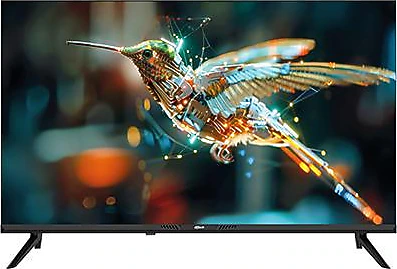
The Dijitech 32 DJS 10000 HD is aimed at people who aren’t looking for a large screen or high resolution, and will mainly use their TV in a bedroom, kitchen, or another secondary living space. Its 32-inch (82 cm) LED screen, Android TV, and built-in satellite receiver bring everyday TV viewing and internet content together in one device. Three HDMI ports, two USB ports, Wi-Fi, Ethernet, and Bluetooth also give you plenty of connection options despite its compact size.
A screen and resolution that work well in small rooms
The screen has a resolution of 1366x768 pixels and a 60 Hz refresh rate. This isn’t a Full HD or 4K picture, but it provides a reasonable basis for everyday broadcasts and online videos when using a 32-inch TV at a normal viewing distance. Its size also makes it easier to place in most small spaces, whether opposite the bed in a bedroom, where it can be seen from the counter in a kitchen, or as a second screen in a study.
The key consideration here is how close you’ll sit and which content matters most to you. A higher-resolution model may look sharper for small text viewed up close, computer images, or content with fine detail. On the other hand, the practicality of a 32-inch screen stands out for general TV viewing, such as news, series, daytime shows, and similar content. The 60 Hz refresh rate is also suitable for standard broadcasts and video viewing; this isn’t a screen designed for gaming scenarios where a high refresh rate is especially important.
Broadcasts and online content on one screen with Android TV
Android TV means this model is more than a device for watching antenna or satellite broadcasts. You can connect wirelessly to the internet over Wi-Fi or use the Ethernet port for a wired connection to your router. If the Wi-Fi signal is weak where the TV is placed, a wired connection can make the setup more stable. Compatible Android TV apps provide access to online video and other digital content; it’s a good idea to check that the apps and services you plan to use are compatible with the TV before buying.
The smart platform is a particularly useful convenience for a second TV at home. You can switch between satellite broadcasts and online content on the same device without connecting a separate streaming box over HDMI. This setup suits everyday needs such as watching a movie in the bedroom, viewing content in the kitchen, or following a broadcast in another room while the main TV is in use. The technical specifications alone don’t provide a definitive picture of Android TV’s speed or how smoothly it switches between apps, so it’s best to keep expectations at the level of basic smart TV use.
Satellite receiver and connections reduce the need for extra devices
The built-in satellite receiver can eliminate the need to add an external satellite box to the TV for watching satellite broadcasts. Setup requires a satellite dish cable to reach the TV and the channels to be tuned. If your home already has a satellite connection, this makes for a simpler setup; if you use a different broadcast infrastructure, consider the connections and receiver you’ll need in advance.
Three HDMI inputs offer the flexibility to connect devices such as a game console, media player, computer, or external streaming box at the same time. The two USB ports provide connections for compatible accessories and USB storage devices; supported files and functions may vary depending on the content or device. Bluetooth also lets you connect compatible wireless accessories. This can reduce cable clutter and help you arrange your setup to suit the room. Having a useful number of HDMI and USB ports for this screen class means you aren’t limited to the TV’s built-in smart features.
Sound and everyday-use expectations
Audio output power is 16 W RMS. The built-in sound system can be a good starting point for TV broadcasts, talk shows, and everyday content in a small room. In a larger room, if you want fuller sound or a more expansive soundstage for movies, you may prefer an external audio solution. Bluetooth allows you to use compatible wireless audio devices, but you should also check that the devices you plan to connect are compatible with the TV.
Before setting up the TV, make sure the surface where you plan to place it has enough room for a 32-inch screen and that the antenna, power cable, and internet connection can reach it. If you plan to wall-mount it, check the mounting equipment and compatibility separately; don’t assume it will fit based on screen size alone. If you’re placing the TV on a table, leave enough access space behind it for HDMI devices and cables to make changing connections easier.
Who should consider it, and who should look at another model?
The Dijitech 32 DJS 10000 HD’s clearest advantage is that it combines a satellite receiver and Android TV in a small screen. People who don’t want to buy a separate satellite box or smart streaming device and will mainly use their TV for basic viewing and online content can benefit from this all-in-one setup. Three HDMI inputs are also a practical advantage if you use a console, computer, and another media device together. If its price is attractive compared with similarly sized smart TVs, having the essential features in one unit can make it a reasonable option.
On the other hand, the 1366x768 resolution may be limiting if Full HD picture quality is a priority or you plan to use the TV up close as a computer screen. Likewise, those looking for a larger viewing area to watch from a distance in a bigger room, or for high-refresh-rate gaming, would be better off looking at a different class of TV. When comparing prices, look beyond Android TV and the number of inputs and also consider the resolution of similarly sized models: if moving to a Full HD competitor comes at a meaningful price difference and sharpness matters to you, paying that difference may be worthwhile; if you’ll use the TV for everyday broadcasts in a small room, the Dijitech’s built-in satellite receiver and smart platform may offer more value.
In short, this model stands out more for its practical size and combination of core features than for advanced picture capabilities. For anyone looking for a second TV for a small space, its combination of Android TV, a satellite receiver, and varied connections in one device is a strong reason to consider it. For those who want a sharper picture or a larger screen, its resolution and size limitations will be decisive.