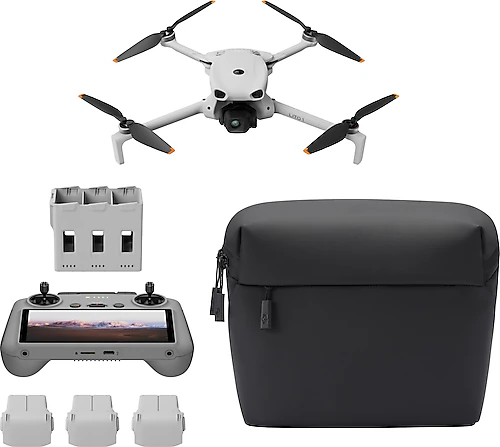
The DJI Lito X1 Fly More Combo Plus RC 2 combines a foldable 249-gram body with a 4K camera, GPS, and a range of automated flight functions. It is aimed at people looking for a drone that is easy to carry on trips and offers features such as route tracking and smart return-to-home alongside basic flight controls. The RC 2 controller in the model name also highlights the package’s control setup.
Portability and flight characteristics
The Lito X1’s foldable design makes it more than a device intended only for use at home or in a dedicated flying area. The drone is listed as measuring 251x183x79 mm, and its folded form is suitable for carrying in a bag. Still, it is worth checking which configuration these dimensions refer to and whether a carrying case is included before buying; the Fly More Combo Plus wording in the product name alone does not specify all the accessories in the box.
At 249 grams, it offers an important advantage by reducing the load you have to carry on walks and trips. Some users may find a drone in this weight class easier to transport and bring along on short outings than heavier models. However, flight rules vary from country to country; when considering registration, permits, and weight limits, take the regulations at your destination into account, not just the drone’s weight. Also check the actual takeoff weight if you use accessories or a different battery.
Its listed maximum speed of 12 m/s allows the drone to travel along a moving route as well as capture calm landscape shots. But speed alone does not make for good footage: planning your route in advance, avoiding sudden changes in direction, and keeping a safe distance from people and structures remain important for smooth filming. GPS, hovering, and smart return-to-home are practical tools that support this planning. In particular, a drone that can hold its position is easier to control during your first flights, making it simpler to frame shots and get used to the basic controls.
4K camera and automated shooting options
The Lito X1’s camera offers 4K resolution. This is a useful starting point for anyone who wants to record travel footage, outdoor scenery, or short hobby videos in high resolution. Vibration reduction helps minimize the effect of small movements in the air, while the 82-degree field of view is intended to include a broad area in the scene. Keep nearby objects in mind when framing a shot: a wide field of view fits more into the frame, but it does not compose the scene for you.
The 4K label alone does not describe image quality. The sensor, image processing, color profile, frame rate, and performance in different lighting conditions all affect the result. So rather than assessing the Lito X1 at the same level as professional camera equipment, it makes more sense to consider it in terms of the needs of people who want 4K aerial footage from a portable drone. Its resolution is appealing for social media, personal travel archives, and hobby projects; if you have more specific expectations, such as recording formats or low-light performance, look into those separately.
Automated movements such as circular and spiral flight can make it easier to create short shots that look more consistent than a route flown entirely by hand. For example, you could plan a shot that shows a scenic spot from all sides, or one that rises while keeping the subject centered. Route tracking and autopilot are also designed to reduce the workload of controlling the drone while it carries out preset movements. Even so, automated shooting does not remove your responsibility to monitor the flight area: check for obstacles, wind, crowds, and your return route before takeoff.
Obstacle detection, GPS, and safe use
Obstacle detection is one of the Lito X1’s features intended to make it more accessible to use, alongside its automated flight functions. This assistance can be helpful, particularly when it is difficult to keep your attention on your surroundings while filming, but it should not be treated as a guarantee that every obstacle will be detected from every direction and in all conditions. Thin branches, cables, low light, and complex surroundings call for more careful flight planning. Making your first flight in a new place slowly and in an open area is a better habit than relying entirely on the sensors.
GPS positioning and smart return-to-home are valuable safety aids for guiding the drone home if the connection or flight conditions cause problems. It is still the user’s responsibility to check the return point before takeoff, set the return altitude in relation to nearby structures, and monitor the battery level. The listed 8,000 m control distance is also not a recommendation to fly that far. Line of sight, interference, local rules, and battery reserve always take priority over distance.
The battery capacity is 2788 mAh, and the stated flight time is 36 minutes. Don’t treat this as a guaranteed filming time regardless of conditions: wind, temperature, flying style, and battery condition all affect time in the air. You should not plan to use the entire battery if you need to return safely. The charging time is listed as 73 minutes; if you plan to make multiple flights, it is better to check the charging arrangements and how many batteries are included in advance than to make assumptions based on the Fly More Combo Plus name.
Who should consider it?
The Lito X1 seems well suited to hobby users who want to carry lightweight gear on trips, add an aerial perspective to landscape or event footage, or make more varied videos with automated flight movements. The combination of GPS, hovering, obstacle detection, and return functions also provides a set of conveniences that people buying their first drone may want to consider. Route tracking and circular or spiral flight offer a way to try repeatable shot ideas beyond simply pressing a button and flying.
Those looking for more manual flight practice, quick maneuvers, or a professional camera workflow should compare the control options, image settings, and controller details with their needs before buying. The model name specifies an RC 2 controller; if its operating setup and screen-related features matter to you, confirm the box contents and exact package name. The space available for flying, battery storage, and time needed for charging can also affect everyday use.
When choosing among similar lightweight, foldable drones, the Lito X1 stands out for combining a 249-gram weight, 4K recording, a stated flight time of 36 minutes, and automated shooting aids. On the other hand, it would not be right to conclude that it is better than its rivals based only on resolution or range figures; camera details, sensor coverage, real-world conditions, and package contents should also be compared. If you will actually use these features and the package price remains reasonable compared with similar options, the Lito X1 could be a worthwhile choice. If your priority is simply basic flight, consider whether the automated shooting features are worth paying extra for.