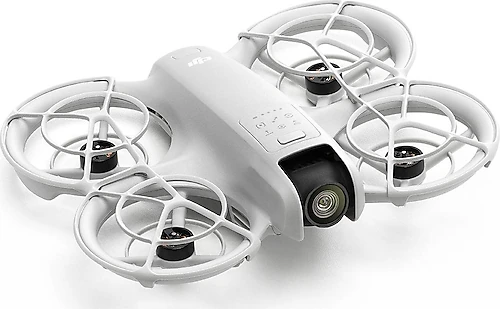
DJI Neo is a compact drone that combines a portable body with a 4K camera and various smart flight features. Its 135-gram weight and 13x15.7x4.85 cm dimensions make it easy to carry outdoors, while features such as GPS, automatic return-to-home, and hovering stabilization make the flight experience more controlled. The model aims to offer a straightforward setup for people looking for practicality in nature, event, and creative project shoots, as well as those who are new to using drones.
Compact body and portability
One of DJI Neo’s standout features is its low weight and compact dimensions. The 135-gram body makes it easy to carry the drone on trips, hikes, or outdoor activities. Its 13x15.7x4.85 cm dimensions also indicate a body that takes up little space during transport. This design offers practicality for users who want to prepare their equipment quickly when a shooting opportunity arises.
The compact design does more than make transportation easier; it also helps provide more flexible movement in different shooting environments. In scenarios such as nature photography, event recording, or personal content creation, users can capture aerial footage without carrying heavy or bulky equipment. The body, made with durable materials, is highlighted in product descriptions as a long-lasting design suitable for outdoor use.
DJI Neo’s operating temperature is specified as between -10° and 40°C. This range provides a broad operating window for use in different seasons and various outdoor conditions. Even so, drone users need to consider the safe flight area and local rules in addition to environmental conditions.
4K camera and vibration reduction
DJI Neo focuses on aerial photography and video recording with its 4K-resolution camera. The high resolution makes it possible to capture images in greater detail and use footage in different creative projects. For users creating nature footage, event recordings, or social media content, the camera is one of the drone’s key strengths.
The camera has a 117-degree field of view. This wide angle is useful for shots that aim to include more of the surroundings in the frame. It can provide a more comprehensive perspective, especially for landscapes, groups, or moving environments. The wide field of view also makes it easier to show the drone’s movement in the air and the surrounding area in a single shot.
The vibration reduction feature helps reduce the impact of shaking that may occur while the drone is moving. Considered together with the hovering stabilization system, this feature provides important support for smoother footage. As a result, users can focus not only on flying but also on keeping the image more balanced.
Smart flight modes
Among the features that make DJI Neo easier to use are smart flight options such as circular flight, spiral flight, and route tracking. Circular flight mode can be used to orbit a particular subject or person and create more dynamic footage. This type of movement is useful for users who want to add more motion to a video instead of shooting from a fixed angle.
Spiral flight allows the drone to follow a spiral-shaped route as it rises or moves. It offers a creative option for users who want to gradually show the surroundings of a landscape or subject. The route tracking feature also helps maintain a specified movement more consistently.
These modes reduce the need to control every flight movement manually. People who are new to drones can use preset flight options while developing their basic control skills. Experienced users can also treat these modes as a quick starting point for specific scenes.
GPS, stabilization, and automatic return-to-home
The presence of GPS on DJI Neo helps the drone determine its position and follow a more controlled course during flight. The GPS system works together with the hovering stabilization feature to help the drone maintain its position. This is important for keeping the frame more stable during recording and making control easier.
The smart return-to-home feature is a safety-focused option that helps the drone return to its starting point after flight. Although users continue to control the drone during flight, automatic return support provides additional convenience in certain situations. This makes it more practical to track the drone’s position and end a flight.
Obstacle detection is also noteworthy for flight safety. This system helps the drone detect obstacles around it and can provide a more controlled experience, especially for new users. However, such assistance does not remove the user’s responsibility to observe the surroundings and assess the flight area beforehand.
Speed and flight time
DJI Neo’s maximum speed is listed as 57.6 km/h. This allows the drone to move quickly under suitable flight conditions and cover larger areas in less time. It offers useful capacity for fast transitions, tracking shots, or dynamic landscapes.
Flight time is 18 minutes. This can provide sufficient operating time for short, planned shoots. Determining the route, framing, and flight mode before recording helps make more efficient use of the available time. For longer projects, the flight plan needs to account for this duration.
The drone’s battery capacity is 1435 mAh. Charging time is specified as 60 minutes. For this reason, users who want to reduce waiting time between flights may benefit from planning their shoots in advance. Monitoring the battery level is useful for keeping the experience more organized when quick preparation is required.
Control range and everyday use
The specified control range for DJI Neo is 7000 m. Under suitable conditions, this provides a broad operating area and allows the drone to reach more distant points during outdoor shoots. However, the control range should be evaluated alongside flight safety and environmental conditions. Keeping the drone within visual range and maintaining control over the flight area is important when using this feature.
The user-friendly interface and smart flight modes make DJI Neo a model suitable for different experience levels. Hobbyists can learn basic flight and recording features more easily, while creative users can speed up their content production process by using automated routes. Having the camera, GPS, and stabilization systems in the same body also simplifies everyday use.
Who is DJI Neo suitable for?
DJI Neo is a drone that can be considered for nature shoots, event videos, personal content, and creative projects. Its compact design makes it a suitable option for users who want to carry their equipment with them frequently. The 4K camera and 117-degree field of view appeal to those who want to record broader, more detailed aerial footage.
For users with limited drone experience, features such as GPS, hovering stabilization, obstacle detection, and automatic return-to-home can make the learning process easier. More experienced users can perform more structured shoots with options such as circular flight, spiral flight, and route tracking. In this respect, DJI Neo offers flexibility not only to users who rely on manual flight but also to those who want to benefit from automated assistance.
Conclusion
DJI Neo complements its lightweight, portable body with a 4K camera, GPS-based flight support, and creative automatic modes. Its 18-minute flight time can work well for short, planned shoots, while the 60-minute charging time makes flight planning important. Overall, it offers a balanced drone option for those who want a combination of easy portability, adaptability to different shooting scenarios, and features that simplify operation.