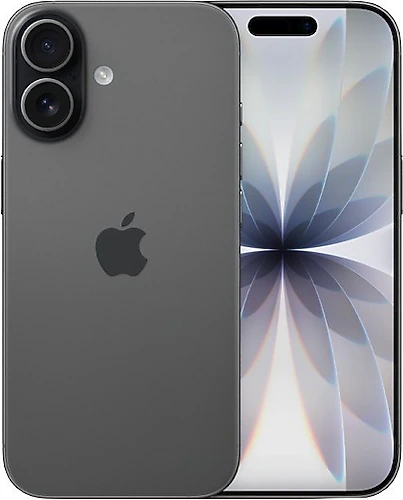
The iPhone 17 brings the familiar iPhone experience to a smoother display, an A19 processor, and a dual 48 MP rear camera system. Its 6.3-inch size strikes a reasonable balance between one-handed use and a spacious viewing area, while 256 GB of storage offers flexibility for those who want to keep photos, apps, and offline content together. It may appeal especially to users planning to keep their phone for a long time and who value a good display and reliable video features.
The difference a 120 Hz display makes in everyday use
The 6.3-inch OLED display has a resolution of 2622 x 1206 pixels and a density of 460 PPI, making text, photos, and videos look sharp. One of its main everyday advantages is its 120 Hz refresh rate: scrolling through pages, navigating menus, and playing supported games all look smoother. If you’re switching from a phone with a standard refresh rate, you’ll notice the difference most in these small but frequent interactions.
The display’s 3000-nit brightness provides a high peak brightness that makes it easier to see the screen outdoors. The OLED panel’s HDR and Dolby Vision support also makes for a more impressive viewing experience with compatible content. Always-on Display is convenient for anyone who wants to check basic information on the screen without fully waking the phone. Ceramic Shield Glass 2 provides added protection for the front surface, but it shouldn’t be treated as a guarantee that you can use the phone carelessly without a case.
A19 boosts your capabilities for gaming and content creation
The six-core A19 processor and 5-core Apple GPU provide a powerful foundation for tasks such as switching between apps, editing photos, and gaming. The 8 GB of RAM supports a smooth experience when working with multiple apps at once. It wouldn’t be right to make a definite prediction about how performance will change under heavy use or how long it will last, but it’s clear that the iPhone 17 has the hardware to handle more demanding tasks, not just messaging and social media.
This hardware also suits people who play games on their phones, edit footage on the go, or make frequent video calls. 5G support enables fast mobile connectivity, while connections such as Wi-Fi, Bluetooth 6.0, and NFC round out everyday use. Screen mirroring can be useful for displaying the phone’s screen on a compatible, larger display. The stereo speakers also mean you don’t have to rely on sound coming from a single point when watching videos or playing games.
Dual 48 MP rear cameras and 4K video
There are two 48 MP cameras on the back. This setup offers options for different shooting needs, and optical image stabilization helps reduce the effects of small movements when shooting handheld. Since camera resolution alone doesn’t determine photo quality, the 48 MP figure shouldn’t be taken as a guarantee of superior results in every situation. Still, for users who value high-resolution sensors and are familiar with the iPhone camera experience, this system promises a wide range of uses, from everyday photos to more carefully composed shots.
The rear cameras can record 4K Ultra HD video at 60 fps. That’s useful for anyone who wants to capture action more smoothly and get detailed footage for editing later. The 18 MP front camera also supports 4K Ultra HD video recording at 60 fps; in addition to video calls, people making videos for social media can make greater use of the front camera. Although 256 GB of storage may seem ample at first, space can be used up quickly as 4K recordings, games, and offline media accumulate. If you record videos regularly, it’s worth thinking about how you’ll back up your content and how much space you want to keep free on the phone before buying.
Size, battery, and charging options
Measuring 149.6 x 71.5 x 8 mm and weighing 177 grams, the iPhone 17 has a profile that’s easier to carry than that of phones with larger screens. A glass body and aluminum frame define its choice of materials. The IPX8 water-resistance rating means added protection from water exposure, but it shouldn’t be interpreted as a dust-resistance rating, and using the phone underwater shouldn’t become a habit.
A 3692 mAh lithium-ion battery capacity is specified, but capacity alone doesn’t determine everyday battery life; screen brightness, connectivity, gaming, and camera use all affect power consumption. How often you’ll need to charge the phone will therefore depend on your usage habits. Fast charging and wireless charging support accommodate different charging routines; wireless charging power is listed as 25 W. The wired connection uses USB Type-C. The headphone connection is also USB Type-C, so anyone using wired headphones will need to choose a model with a compatible connector.
Support for Nano SIM and eSIM, allowing dual-SIM use, can be useful for people who keep personal and work numbers on the same phone. Face recognition makes unlocking the phone easier, too. Sensors such as GPS, an accelerometer, a gyroscope, and a barometer contribute to location, motion, and various app functions.
Who should consider it?
The iPhone 17 is a good fit for anyone looking for a smooth OLED display, high-resolution video recording, a powerful processor, and Apple’s iOS experience in one device. For those planning to use their phone for several years, the A19 and 120 Hz display are features that make a difference today and could remain valuable throughout ownership. The 256 GB capacity makes it easier to keep a photo and app library on the phone, but anyone storing lots of 4K video should also consider higher-capacity options.
Whether it’s worth choosing a more affordable model depends on whether the display’s smoothness or the camera and video features are worth the extra cost to you. Android flagships in a similar price range may stand out with more storage, different camera zoom options, or faster charging. The iPhone 17 sets itself apart with the combined experience of the A19, 120 Hz OLED display, dual 48 MP rear cameras, and iOS. For people using an earlier-generation iPhone, the decision to upgrade will depend on the refresh rate, camera, and performance needs of their current phone; those moving from an older device may notice the improvements more clearly.
Ultimately, the iPhone 17’s strongest case isn’t one eye-catching figure, but the way its display, processor, and cameras complement each other in everyday use. If the price difference feels worthwhile for features such as the 120 Hz display, A19, and 4K60 video, the 256 GB version is a balanced option that can serve you well for a long time. If you need more storage or expect to use these features less often, it’s better to compare the overall value of more affordable alternatives.