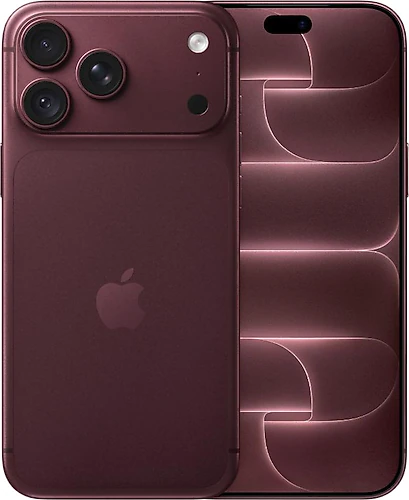
The iPhone 18 Pro Max is a high-end model designed for people who want a large display and advanced camera capabilities in a single phone. Its 6.9-inch OLED panel, 120 Hz refresh rate, and A20 Pro processor are geared toward everything from everyday use to gaming. The 256 GB Burgundy version has features that will appeal especially to people who enjoy taking photos and videos, but its 249-gram weight and storage capacity shouldn’t be overlooked when making a purchase decision.
Work, watch, and play on a large screen
The 6.9-inch OLED display makes the phone suitable not only for messaging and social media, but also for watching content for extended periods and working on the go. Its 2868 × 1320 pixel resolution and 460 PPI density help text and images look detailed. OLED’s vibrant image quality, combined with HDR and Dolby Vision support, can provide a more immersive viewing experience for movies and TV shows. The display brightness is listed at 1000 nits, a value that helps make the screen usable in different everyday environments.
The 120 Hz refresh rate makes movement smoother when navigating the interface, scrolling through pages, and playing supported games. This is a comfort that not only gamers but also people who spend a lot of time on their phones throughout the day may notice. With Always On Display, you don’t have to fully wake the screen to see basic information. The 90.7 percent screen-to-body ratio also means the large panel takes up more of the front of the device.
The trade-off is that this isn’t a small or light phone: it measures 163.4 × 78 × 8.75 mm and weighs 249 grams. That’s a significant compromise for people who prefer extended one-handed use or want a phone that fits into narrow pockets. If you like a large screen, this is an advantage; if you prioritize a light, compact design, it’s something you should definitely consider before buying. Ceramic Shield Glass 2 screen protection and a glass body support its premium look, though using a glass-surfaced phone without a case and screen protector may not be a good idea.
Triple camera and high-resolution video
There are three 48 MP cameras on the back. This setup offers multiple camera options for different shooting needs, but megapixel counts alone don’t determine photo quality. Results also depend on lighting, lenses, and image processing. Optical image stabilization can help reduce the effects of small camera movements, especially when shooting handheld.
A standout video feature is support for recording at 4K Ultra HD resolution and 120 fps with the rear cameras. This flexibility is useful for people who want to capture action, create slow-motion footage after recording, or shoot smoother video. The front camera is 18 MP and supports 4K Ultra HD video recording at 60 fps. Along with video calls, people who create videos for social media can also benefit from the front camera’s high-resolution recording option.
For frequent camera users, whether 256 GB of storage is enough depends on their habits. Someone who keeps a photo archive, installs lots of apps, or records long 4K videos may fill up the space sooner. The same capacity will be more comfortable for users who regularly transfer their content elsewhere. So when choosing this version, consider not only how much free space you need today, but also how long you plan to use the phone and how much video you expect to store.
A20 Pro, battery, and everyday connectivity
The A20 Pro chipset comes with a 6-core processor and a 7-core Apple GPU. Combined with iOS, it offers a high-end setup for tasks such as gaming, switching between apps, and video editing. The combined capabilities of the processor and graphics unit are especially relevant for people who want to play games on a large screen or work on their videos directly on the phone. AI support is also among the listed features, though which functions are available in which apps depends on the software experience.
The 5391 mAh lithium-ion battery capacity should be considered alongside the wide range of uses enabled by a phone with a 6.9-inch display. Actual battery life varies with screen brightness, gaming and camera use, connectivity conditions, and apps; it isn’t possible to determine an exact daily runtime from capacity alone. Fast charging is supported, and wireless charging power is listed at 25 W. Reverse wireless charging may also be useful for charging compatible accessories through the phone.
The USB Type-C port can be used for charging and wired audio, and the headphone connection is also listed as USB Type-C. So if you use headphones with a 3.5 mm plug, you’ll need a suitable adapter or USB-C headphones. Stereo speakers, Bluetooth 6.0, Wi-Fi, NFC, GPS, and screen mirroring round out the phone’s capabilities for everything from everyday communication to navigation and content sharing. 5G support also enables newer-generation mobile connectivity on compatible networks.
Dual-SIM use is possible with Nano SIM and eSIM support. This flexibility can be useful for travel or separating work and personal lines if you want to use one physical SIM and one eSIM. Features such as facial recognition, a barometer, an accelerometer, and a gyroscope also play a role in unlocking the phone and in location- and motion-sensitive apps. The IPX8 water-resistance rating provides extra protection against water exposure, but it shouldn’t be taken to mean the phone will remain undamaged in every situation.
Who should choose it?
The iPhone 18 Pro Max 256 GB Burgundy is a compelling option for those who want a large, smooth display, 4K high-frame-rate video recording, a triple rear camera, and the iOS experience in one device. People who game, watch videos on their phone, or like to shoot and edit content on a single device will get more out of the Pro Max’s large screen and hardware. The Burgundy color will also appeal to those looking for a different look from classic black or lighter shades.
If you’re looking for a smaller, lighter phone that’s comfortable to use one-handed, the Pro Max’s 249-gram body may shift the balance of your decision. When comparing it with similar high-end Android models, consider the screen size, video recording options, operating system preference, and device weight together rather than focusing only on camera megapixels or battery capacity. Since no price information is available, it wouldn’t be right to make a definitive price-performance ranking. If the price difference makes sense to you specifically because of the large OLED screen, 120 Hz refresh rate, 4K 120 fps recording, and iOS ecosystem, choosing this model is easier to justify; if you won’t use these features much, a lighter or more affordable high-end phone may be a more balanced choice.