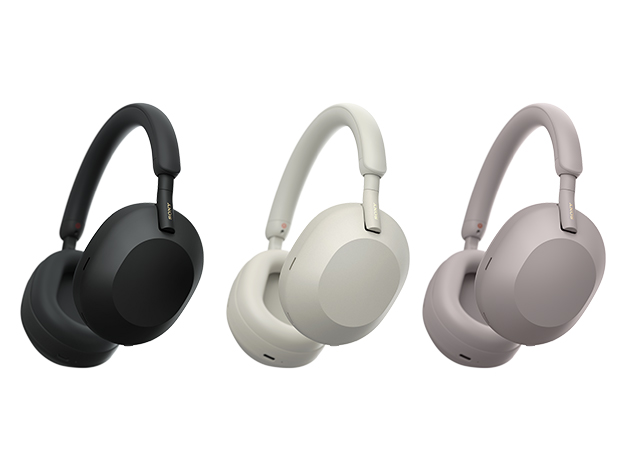
For commuters and frequent travelers who want strong noise cancellation without paying top dollar for Sony’s newest flagship, the WH-1000XM5 remains an appealing buy—provided its bulky case and fit work for them. It combines effective noise reduction, a customizable wireless sound profile and long battery life in a comfortable, lightweight package. The main reason to look elsewhere is practical rather than technical: the earcups do not fold, and fit can vary enough to affect both comfort and isolation.
Design and comfort
At about 250 grams, the WH-1000XM5 is light for a full-size wireless headphone. Its smooth, understated design feels suited to a commute, an office or a long flight rather than a workout. The earcups surround the ears, while the padded headband helps keep the weight manageable during extended listening. For people who spend hours on calls or listening to music, that balance matters: a headphone can cancel plenty of noise and still become tiring if it presses too hard.
Comfort is personal, though. Some listeners may feel pressure from the headband, and glasses or a less-than-secure fit can create small gaps around the ear cushions. Those gaps may let in sound and reduce how consistently the noise cancellation works. Anyone with a history of trouble finding a comfortable over-ear fit should try the XM5 on if possible, rather than assuming its light weight guarantees a good match.
The bigger everyday design compromise is storage. The XM5’s earcups do not fold inward, so it takes up more room in a bag than a folding travel headphone. Its case protects the headset, but frequent packers should make sure they have space for the full-size case. At a desk or around the house, this matters much less.
Sound
The XM5’s default sound gives bass and treble noticeable presence, with midrange details sitting a little further back. That makes music feel lively and full, particularly for listeners who enjoy a punchy presentation. It is not the most neutral tuning for people who want vocals and instruments presented with strict balance, but the sound can be adjusted to taste in Sony’s app.
That ability to personalize the profile is useful in practice: listeners can soften the bass for spoken content or change the balance to suit different music. The headphone also supports LDAC, a higher-bitrate Bluetooth option for compatible source devices. LDAC is not a guarantee of better-sounding music in every situation; the phone, settings and audio material all affect the result. For ordinary wireless listening, SBC and AAC provide broader compatibility.
A 3.5 mm input offers a wired listening option when Bluetooth is inconvenient or a source device lacks a suitable wireless connection. That flexibility is handy on a plane or at a desk, though the XM5’s strongest everyday case is still as a wireless headphone.
Noise cancellation
Noise cancellation is the XM5’s standout reason to buy it. It is particularly effective against steady low-frequency sounds such as engines, making the headphone a strong companion for buses, trains and flights. It also reduces office chatter, helping create a quieter bubble for focused work. It will not make every nearby voice or sudden sound disappear, but it can significantly lower the background noise competing with music, podcasts or concentration.
Fit affects the result. A good seal around the ears helps the headphone block sound consistently; glasses, hair or the position of the earcups can interfere. That is worth bearing in mind if the XM5 seems less effective than expected: small changes in placement may matter. For travel and desk use, where strong isolation can make low-volume listening more comfortable, the overall performance remains a major strength.
Calls and connections
Multipoint lets the XM5 stay connected to two devices at once. A common example is a laptop and phone: listen to audio on the computer, then move to a call on the phone without manually disconnecting and pairing again. For people who switch between work and personal devices throughout the day, that small convenience can make the headphone easier to live with than a model limited to one active connection.
The microphone is suitable for everyday conversations, but it is not a substitute for a dedicated headset in demanding conditions. Voices may sound less full, and loud, continuous background noise can interfere with a call. It is a reasonable choice for routine meetings and phone calls; people who need consistently polished voice pickup in noisy places should prioritize a headset designed around calls.
Battery and charging
Sony rates the XM5 for up to 30 hours of listening with noise cancellation enabled. Independent test results vary, so that figure is best treated as a useful estimate rather than a promise for every owner. Volume, listening settings, connection conditions and battery age all influence runtime. Even with those variables, the XM5 is built to handle a long trip or several days of commuting without requiring a recharge after every outing.
A 3.5 mm cable provides a fallback for listening when the battery is depleted, assuming the source has an appropriate headphone connection. That does not replace keeping the headset charged for wireless features and noise cancellation, but it gives the XM5 another practical use when charging is not convenient.
Weaknesses
The non-folding construction is the clearest drawback for travelers who want a compact bag. The fit is another potential sticking point: headband pressure or a poor seal can undermine the comfort and isolation that make this model attractive. Those are not universal problems, but they are important enough to consider before buying.
The XM5 is also not the best match for vigorous exercise or latency-sensitive wireless gaming. It can shift during energetic movement, and wireless delay may be noticeable in games. A wired connection can reduce that delay, but buyers looking primarily for a stable sports fit or gaming features should choose a more specialized model.
Closest alternative: Sony WH-1000XM6
The WH-1000XM6 is the direct successor and the clearest alternative for buyers who want Sony’s newest flagship. It improves noise reduction, particularly for midrange sounds, and its revised construction is a better fit for people who value a more travel-friendly design. Those refinements make the XM6 the stronger choice when carrying convenience and the latest performance matter more than price.
The XM5 makes more sense when the price difference is substantial and its core strengths are what matter most: effective travel noise cancellation, a customizable sound profile, multipoint and dependable all-day battery ambitions. Paying extra for the newer model is easier to justify for frequent travelers who will appreciate the design and noise-cancellation improvements every day.
Buying verdict
The Sony WH-1000XM5 is still a persuasive over-ear headphone for commuting, office work and air travel, especially when discounted. Its noise cancellation is the headline feature, while multipoint, app-based sound adjustment and long battery life make it a capable everyday companion. Choose it if the savings are meaningful and the full-size, non-folding design suits your routine. Choose the WH-1000XM6 instead if compact packing and the newest noise-cancellation improvements are worth paying more for. If possible, check the XM5’s fit before committing: that is the deciding personal factor in an otherwise strong package.