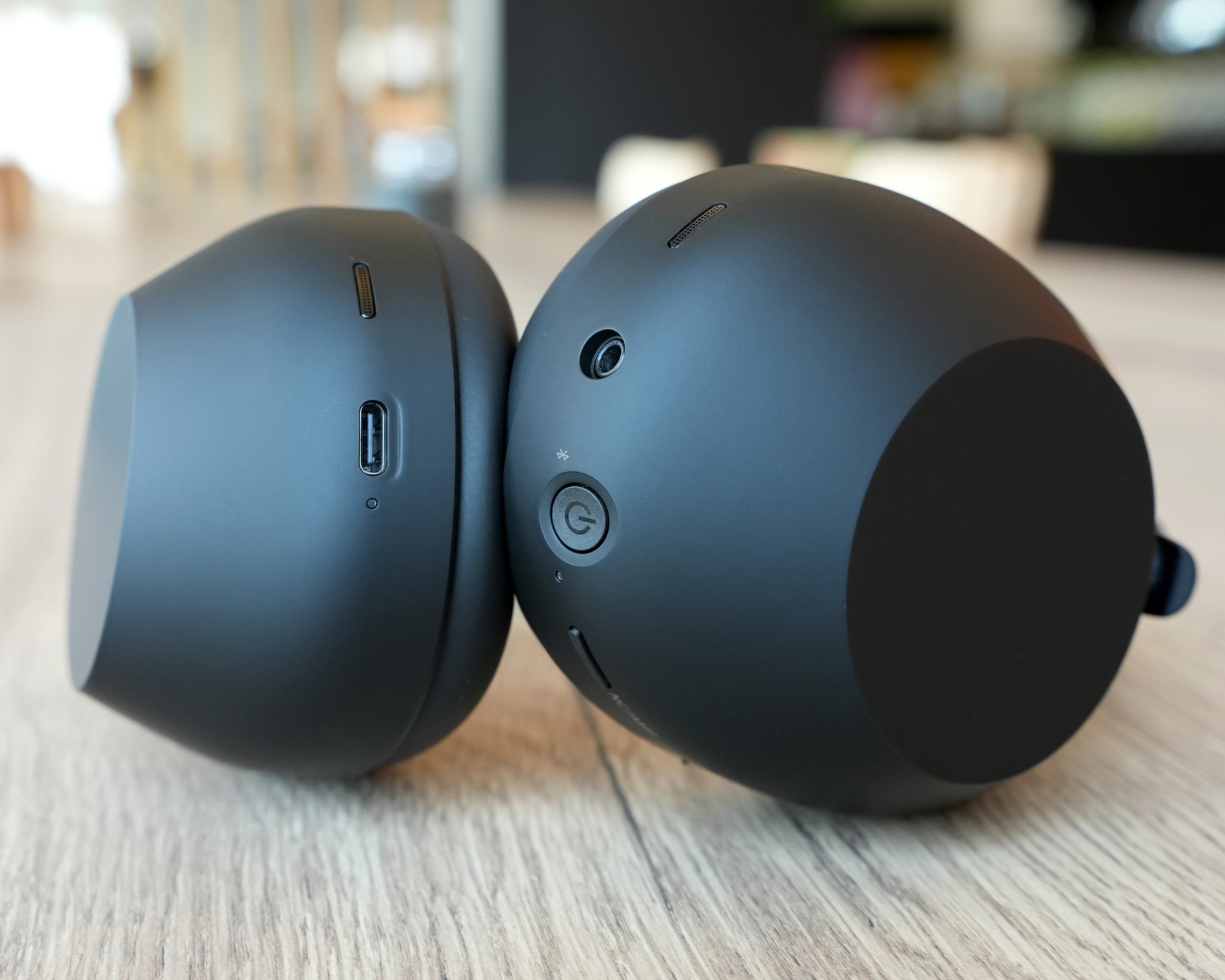
The Sony WH-1000XM6 is a strong choice for travelers, commuters and office listeners who want excellent noise canceling without giving up engaging sound or handy everyday features. Its foldable design is easier to pack than the previous XM5, and multipoint Bluetooth makes switching between a laptop and phone simpler. The main reasons to hesitate are its premium price, a 30-hour battery rating with noise canceling on, and a fit that may not suit every head or pair of glasses.
Design and comfort
At about 254 grams, the XM6 is light enough for long listening sessions, and its broader, flatter headband is designed to spread pressure more comfortably. The ear cups surround the ears, helping create a useful seal for both noise canceling and sound. As with any over-ear headphone, comfort depends on head shape and ear size; glasses can also affect the fit and the consistency of the sound. Trying them on before committing is worthwhile if you are sensitive to pressure.
The folding hinges are a practical return. Unlike the XM5, the XM6 folds into a more compact shape for packing, making it easier to stow in a bag between flights or commutes. It comes with a firm carrying case, though the headphones need to be positioned flat inside it. Take care around the hinges when folding or unfolding them, since fingers can get caught in the moving parts.
Sound
The XM6’s sound is detailed and natural, with enough dynamic energy to keep music lively rather than clinical. It handles varied listening well, from vocals and acoustic tracks to fuller, more layered recordings. Sony’s app gives listeners room to adjust the sound to their preferences, so the default tuning need not be the last word.
For compatible sources, LDAC supports higher-resolution Bluetooth transmission. Actual playback depends on the phone or other source, its settings and the chosen codec; the XM6 also supports SBC, AAC and LC3. The practical benefit is flexibility: listeners can use common codecs for broad compatibility or choose a supported higher-quality option when their device allows it.
Noise cancellation
Noise canceling is a central strength. Sony’s QN3 processor and 12-microphone system help reduce the steady background rumble of travel and the distracting wash of an office. That makes it easier to focus or listen at a more comfortable volume. An ambient sound mode lets outside noise back in when a conversation or announcement matters, so the headphones can stay on instead of being removed every time the surroundings change.
The XM6 is a particularly good fit for frequent flyers and people working in shared spaces. Bose’s rival can be the better pick for buyers who prioritize the strongest cancellation or want more direct control over its intensity, but the Sony offers a compelling balance of quiet and sound quality.
Calls and connections
Call performance is a useful part of the package, not an afterthought. The microphone system supports clearer conversations in everyday settings, while Bluetooth multipoint can keep the headphones connected to two devices at once. For example, listen to a meeting or music on a computer and answer a call that comes in on a phone without manually disconnecting and pairing again.
The feature depends on the devices and connection settings, but it is valuable for anyone moving between work and personal audio. Bluetooth 5.3 provides wireless connectivity, and the 3.5mm input offers a wired listening option when a cable is more convenient.
Battery and charging
Sony rates the battery for up to 30 hours of music playback with noise canceling on, or 40 hours with it off. That is ample for several commutes or a long trip, though it is not class-leading for buyers who want the longest possible stretch between charges. USB-C is used for charging; it does not carry wired audio. For cable listening, use the 3.5mm connection instead.
Weaknesses
The XM6 costs enough that buyers should be sure they will use its combination of sound, cancellation and features. The battery figure with noise canceling enabled is good for travel, but some rivals last longer. Fit is personal, especially for glasses wearers, and the headphones are not designed for vigorous exercise: movement can make them feel less secure. USB-C charging is convenient, but those seeking USB-C wired audio will need a different model.
Closest alternative
The Bose QuietComfort Ultra Headphones (2nd Gen) are the closest premium rival. Choose Bose if maximum noise cancellation, adjustable ANC or USB-C wired audio matters most. Choose Sony if a more detailed, natural presentation, foldable portability and multipoint connections better match your routine. Both are premium over-ear options with around 30 hours of rated playback with ANC on, so fit and personal priorities should decide the comparison.
Buying verdict
Buy the Sony WH-1000XM6 if you want a well-rounded flagship for flights, commuting and focused work, especially if you value strong noise canceling, versatile sound and effortless switching between two devices. It is less compelling for sports, bargain hunters or anyone who needs USB-C audio. The Bose is the clearer alternative for buyers who put cancellation control and wired USB-C first; for the broader mix of listening and travel features, the Sony is the better fit.