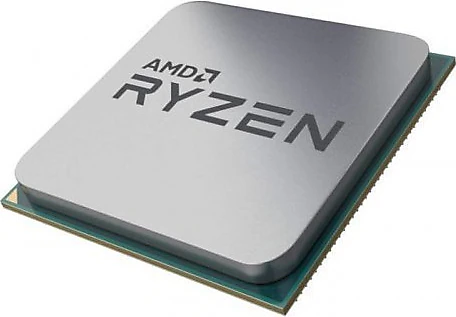
The AMD Ryzen 5 5600 is a 6-core desktop processor for anyone looking to upgrade an AM4 system or build a solid foundation on the processor side while reserving more of the budget for a graphics card. Its 3.50 GHz base clock, turbo frequency of up to 4.4 GHz, and 12 threads offer a useful balance between gaming, multitasking, and everyday productivity. This version comes without a box or fan, so you’ll need to buy a cooler separately.
Balanced performance for gaming and everyday use
The Ryzen 5 5600’s six cores and 12 threads are well suited to running modern games while also using voice chat, a browser, and other applications. Its 32 MB cache and turbo speed of up to 4.4 GHz are useful, especially in CPU-intensive moments in games and during short bursts of demanding work. Of course, gaming performance will vary depending on the graphics card, memory, and game settings. While it’s possible to pair this processor with a powerful graphics card, you shouldn’t expect the same results in every system.
The 12 threads also make everyday non-gaming use more comfortable, whether you’re switching between many applications or handling several tasks at once. With virtualization support, you can use compatible software to set up virtual machines for tasks such as software development, creating test environments, or working in separate workspaces. Its versatility, from home computing to remote work, comes from offering balanced processing power without being overly focused on a single task.
An upgrade opportunity for AM4 systems
One of the Ryzen 5 5600’s most meaningful advantages is its compatibility with AM4 socket motherboards. If you already have a compatible AM4 system, replacing the processor can improve the computer’s overall speed and extend the platform’s life without the cost of a new motherboard and DDR5 memory. Support for DDR4 memory and a 3200 MHz memory speed also complements this approach. Still, check your motherboard’s processor support and required BIOS version before buying; older motherboards in particular may need a BIOS update.
PCIe 4.0 support offers the option to use newer-generation SSDs and graphics cards with compatible motherboards and components. However, the processor’s PCIe 4.0 support alone doesn’t guarantee that an SSD will run at a particular speed: the motherboard’s connections and the drive’s specifications matter too. For those upgrading an existing AM4 computer, this can mean moving to a more current connection standard without immediately replacing the rest of the system’s components.
Plan for a cooler and graphics card during installation
The “tray, fanless” option means that no processor cooler is included in the box. So, factor the cost of a compatible cooler into your budget when buying the processor. Your case’s clearance, the cooler’s dimensions, and AM4 mounting support are all important when choosing one. Its 65 W power consumption puts the processor in a moderate power class, but suitable cooling is still necessary for reliable use and expected operation under heavy loads.
The Ryzen 5 5600 has no integrated graphics, so you’ll need a separate graphics card to get a picture on your computer. This isn’t a problem if you’re already planning to buy a graphics card for gaming or graphics work, but if you want to build a basic desktop that works without one, you’ll need a different processor. If you’re upgrading multiple components, check together that the motherboard has an AM4 socket, the memory is DDR4, and there’s enough room in the case for the cooler.
What does it offer against its competitors?
The Ryzen 5 5600 is especially appealing to those looking to upgrade their processor on the AM4 platform. The Ryzen 5 5600X is another close alternative in the same class; when choosing between them, consider the price difference and the frequencies of both models. If the 5600X costs noticeably more, consider whether the small frequency advantage it offers is something you really want for your use. Lower-tier options such as the Ryzen 5 5500 can help you build a more affordable system, while the 5600’s 32 MB cache and PCIe 4.0 support provide a more capable foundation.
Models from Intel in a similar class are also worth comparing when building a new system, but you should calculate motherboard and memory costs alongside the processor price. If you already have an AM4 motherboard and DDR4 memory, upgrading to the Ryzen 5 5600 may be more attractive overall than moving to a new platform. On the other hand, when building a system from scratch, your decision should depend not only on the processor but also on what the motherboard offers and which graphics card you choose.
Who is it for, and when does it make sense?
The Ryzen 5 5600 is suitable for people who want to speed up an AM4 computer, build a gaming system with a separate graphics card, or run productivity applications alongside games on the same computer. Its 6 cores, 12 threads, and 65 W power class also leave room for more specialized tasks such as virtualization, in addition to everyday use. It offers its best value when you can reuse an existing AM4 motherboard and DDR4 memory, or when its price is significantly more favorable than close alternatives such as the 5600X. Remember that you’ll need to plan for a cooler and graphics card separately; once you factor in both components, it becomes clear whether choosing the Ryzen 5 5600 fits your total system budget.