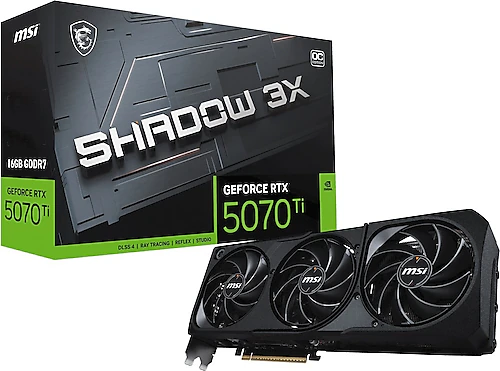
The MSI RTX 5070 Ti Shadow 3X OC 16G is aimed at users looking for high-end gaming performance and wanting to take advantage of next-generation graphics features. It combines an NVIDIA RTX 5070 Ti GPU with 16 GB of GDDR7 memory and a triple-fan cooler. This combination makes it a powerful option not only for high-resolution gaming but also for video editing, 3D work, and GPU-accelerated content creation.
More comfortable high-resolution gaming with 16 GB of memory
The card's 16 GB of GDDR7 memory and 256-bit memory interface help handle high-resolution textures and demanding graphics workloads. This capacity is particularly useful for users targeting high detail at 1440p, considering a move to 4K gaming, or running streams and other applications in the background while gaming. Memory capacity alone does not guarantee a particular level of performance in every game, but it provides more headroom with large texture packs and demanding scenes.
NVIDIA DLSS support lets users choose between performance and image quality through rendering techniques in compatible games. The next-generation DLSS features of the RTX 50 series also make options such as frame generation available in supported games. Results vary between games, and support and settings matter. Even so, these features make the card more appealing to players who want to preserve visual detail at high resolutions. When paired with a G-Sync-compatible display, variable refresh rate can also contribute to a smoother visual experience in supported setups.
Triple-fan cooling and case compatibility
The Shadow 3X OC model's triple-fan cooler is designed to dissipate heat from the high-performance GPU during long gaming sessions. The OC label indicates a factory-overclocked version, so buyers choosing this card are opting for a model designed to deliver performance beyond standard operating settings. Actual operating temperatures and fan noise vary depending on conditions such as case airflow, ambient temperature, and workload.
Check the physical dimensions before buying: the card is 303 mm long, 121 mm high, and 49 mm wide. The triple-fan cooler may limit space in small cases or systems with a radiator and fans at the front. Comparing the case manufacturer's maximum GPU length with the card's dimensions is important to avoid surprises during installation. The card's 300 W power rating should also be factored into power supply and internal airflow planning. When choosing a power supply, consider not only its wattage but also the rest of the system's components and the connections required by the graphics card.
Where is it useful beyond gaming?
This card is worth considering for more than just gaming PCs. It can be used for scene rendering and effects in video-editing and 3D applications that support GPU acceleration. Its 16 GB of memory offers useful capacity for users working on large projects or running multiple creative applications at once. HDMI and DisplayPort connections support different display setups, but before setting up, check the card's port layout and monitor requirements for the number of monitors, connection types, and target resolution. DirectX 12 Ultimate, OpenGL 4.6, and HDCP support also cover gaming, content creation, and compatible display scenarios.
Who should consider it?
The MSI RTX 5070 Ti Shadow 3X OC 16G is aimed less at people looking for a card that simply meets basic gaming needs and more at those planning to use a high-end card for a long time. High settings at 1440p, plans to move to 4K, using DLSS features, or bringing gaming and productivity work together on one computer are all use cases where this model is well suited. 3D support also opens the door to stereoscopic display setups with suitable hardware and software.
When comparing it with a lower-tier model such as the RTX 5070, the extra cost here is best weighed against the higher performance target and the flexibility provided by 16 GB of memory. Alternatives in the same class, such as the AMD Radeon RX 9070 XT, are also worth comparing; the choice depends not only on real-world gaming performance but also on how much you value DLSS and NVIDIA's software ecosystem. Since prices change, it would not be right to say that this MSI model always offers better value for money. If the price difference is reasonable and you have games or applications that can benefit from its features, the Shadow 3X OC may be a worthwhile investment. If you have a smaller case, more modest display goals, or a limited power supply, it would be wiser to look first at more compact options with lower power requirements.