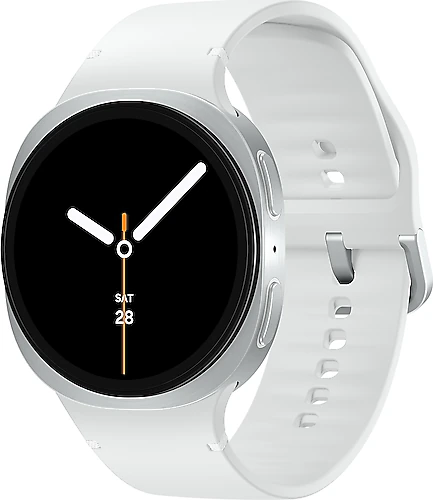
The Samsung Galaxy Watch 8 44mm brings health tracking, notifications, and practical phone-connected features together in a single round watch case. With its 34-gram aluminum case, 1.47-inch Super AMOLED display, and built-in GPS, it’s suited to anyone looking for an Android watch for everyday wear and exercise alike.
Display and everyday use
The 480 × 480-pixel display has a resolution and size that render watch faces, messages, and health data clearly at a density of 327 PPI. Super AMOLED technology makes small text and colorful interface elements easy to see. The round design retains a classic watch feel, while the 44 mm case suits those who want a larger display on their wrist. If you have a smaller wrist, it’s worth considering the size before buying.
The aluminum case and 34-gram weight make the watch more comfortable to wear throughout the day. Features such as inactivity alerts, vibration, and Do Not Disturb mode make it useful not only during workouts but also throughout the workday. Checking notifications on your wrist, finding a misplaced phone with Find My Phone, or making calls from the watch can make daily routines easier. It also has a microphone for calls; however, it shouldn’t be thought of as an independent phone that replaces your phone connection.
Health and exercise tracking
One of the Galaxy Watch 8’s strengths is how it combines basic activity measurements with more extensive health features. Along with step and calorie tracking, it offers heart-rate, SpO2, sleep, stress, and health cycle tracking. Breathing exercises can also help you take a short break in the middle of a busy day. Features such as ECG and blood pressure measurement make it possible to use the watch not just as a workout tracker, but also as a tool to help monitor health habits.
It’s best to view these measurements as a way to track day-to-day trends, not as a medical diagnosis. You may need to check the initial setup steps and phone compatibility for features such as ECG and blood pressure measurement; some health features may be limited to Samsung phones or the Samsung Health Monitor app. You’ll also need to complete app permissions and health profile settings to get the most out of the watch’s measurements.
Built-in GPS reduces the need to always carry your phone when tracking a route during a run or walk. 5 ATM water resistance offers extra peace of mind for activities involving water, such as swimming; this rating doesn’t make the watch diving equipment. Dust resistance also supports everyday durability for people who exercise outdoors.
Performance, connectivity, and storage
The Exynos W1000 processor, 2 GB of RAM, and 32 GB of internal storage provide a setup for using apps and content on the watch. The storage can make room for content such as music or apps if you want to use them independently of your phone; how much space remains depends on the apps and content you install. Wi-Fi and Bluetooth 5.3 round out the phone-pairing and wireless connectivity options. NFC can enable contactless payments through supported payment services.
AI-powered features are among the extras that enhance the health and everyday-use experience. But rather than judging the watch’s value based on that label alone, consider how it will work with the apps you use and your Android phone. The model is compatible with Android phones; it isn’t a suitable choice for iPhone users. Samsung phone owners may be able to use some health features more directly, while the features available on other Android phones may vary.
Battery and buying decision
The stated battery life for the 435 mAh battery is 30 hours. Actual battery life varies depending on how often you use the display, GPS, health measurements, and notifications; plan to charge it regularly if you use it heavily. Wireless and fast charging make charging more convenient, but anyone who prioritizes long battery life should factor the watch’s runtime into their decision.
The Galaxy Watch 8 44mm is a compelling option for Android users who want a large, sharp display, advanced health tracking, wrist-based calls, and built-in GPS in a single device. A simpler smartwatch may be enough if you mainly need basic notifications and step counting. The price difference is easier to justify if you’ll actually use features such as ECG and blood pressure measurement, GPS, 32 GB of storage, and Samsung’s health features. Its main distinction from iPhone-focused options such as the Apple Watch is Android compatibility; among Android watches, Samsung stands out for its health tracking and integration with its phone ecosystem. On the other hand, 30 hours of battery life isn’t a strong point for those who want to charge only every few days.