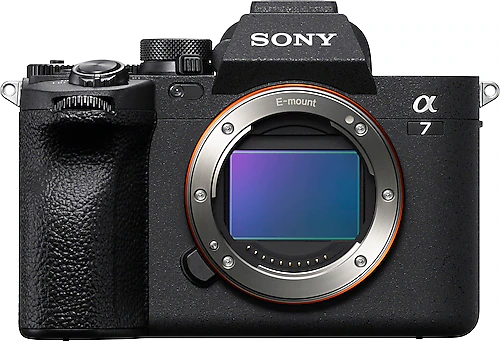
The Sony A7 IV is a full-frame mirrorless camera that takes both photography and video seriously, rather than focusing on just one. Its 33 MP sensor leaves plenty of room for detailed photos, while in-body image stabilization, a vari-angle touchscreen, and a powerful autofocus system help it adapt to different shooting conditions. Remember that the body-only version does not include a lens: you’ll also need to choose a Sony E-mount compatible lens to get started.
Detail and flexibility for photography
The 33 MP resolution offers useful flexibility, especially for landscape, travel, portrait, and product photography where you may want to crop images later or make large prints. Resolution alone does not determine image quality; lens choice, lighting, and technique also affect the result. But for photographers who like to work with detailed files, the A7 IV’s sensor is a meaningful step up from lower-resolution bodies.
The full-frame sensor also offers flexibility when shooting in low-light conditions. With a stated ISO range of 100–32,000, the camera helps you set exposure across a wide range in evening street scenes, indoors, or for portraits in natural light. Noise may appear at high ISO, so it’s worth considering lighting and shutter speed together to get the cleanest results. Five-axis in-body image stabilization also reduces the effects of camera shake when shooting handheld; it’s particularly useful with stationary subjects and in low light. It can’t replace freezing a moving subject, but it helps you shoot handheld with greater control.
Autofocus is one of the A7 IV’s strengths, with face and eye tracking for portraits and subject tracking for people moving through the frame in everyday shooting. Its continuous shooting speed of 10 frames/sec helps capture brief action, from children playing to street moments and amateur sports. If very fast, sustained burst shooting is your top priority, it’s worth comparing models focused on higher shooting speeds. The A7 IV’s approach is to combine high-resolution photography with a reasonable level of burst performance.
The electronic viewfinder makes it easier to compose at eye level in bright outdoor settings, while the 3-inch touchscreen is handy for choosing a focus point or changing your shooting angle. The movable screen lets you see your framing for low-angle product and macro shots, or when recording videos in front of the camera. Touch controls make menu navigation and focusing more direct.
Video and content creation
The A7 IV can record 4K video at up to 30 fps. This offers a detailed, smooth foundation for interviews, travel films, online content, and short promotional videos. Slow-motion mode also lets you show fast movements at a slower pace. Being able to switch from autofocus to manual focus during video is useful if you want to shift focus deliberately from one subject to another; you don’t have to rely on autofocus in scenes where you want to manage focus yourself.
An external microphone input and headphone output let you monitor audio on the camera and use a separate microphone for cleaner recordings. HDMI supports external monitoring or recording setups, while the USB connection helps you set up with a computer and other compatible equipment. Wi-Fi and Bluetooth offer options for transferring files to compatible devices and establishing wireless connections. These features make the camera useful not only as a photography body, but also as the center of a small content-creation setup.
You can record presentations, cooking videos, or product videos in front of the camera using the fully articulating screen; with stabilization and a suitable lens, you can also shoot handheld vlogs or travel footage. The time-lapse feature can turn longer processes, such as moving clouds, a sunset, or changing crowds, into sped-up footage. For longer shoots, it’s a good idea to keep an eye on the battery and carry a spare; recording time can vary depending on resolution, connections, and shooting conditions.
Notes on the body, cards, and setup
This product is sold as a body only; a lens is not included in the box. You’ll need to buy a Sony E-mount lens that suits your needs. Different focal lengths and apertures suit portrait, landscape, sports, or video work, so include the lens in your budget from the outset when calculating the total system cost. In-body stabilization provides support, but the lens’s focal length and intended use are also important when making your choice.
Two memory card slots offer flexibility if you want to record to separate cards or organize photos and videos on different cards. When choosing cards, consider not only capacity but also write speed suitable for video recording. The body weighs approximately 665 g and measures 12.9 × 9.6 × 7.8 cm; the total weight of your bag and gear will increase once you add a lens. If you shoot handheld for long periods, consider the weight of the body and the lens you plan to use together.
Don’t interpret water resistance as waterproofing. Taking reasonable precautions to protect the body from rain, dust, and temperature changes is important, especially when working outdoors. The camera also has no built-in flash, so you’ll need an external flash for flash photography. A Sony-compatible flash connection can meet that need, but adds equipment and carrying weight.
Where does it stand out from its rivals?
Compared with the Sony A7 III, the A7 IV’s 33 MP sensor gives you more room for cropping and detail-intensive work than the previous model’s 24 MP sensor. Its movable screen and updated autofocus also make it more flexible for both photography and video production. The A7 III is still worth considering if you mainly shoot photos and are building a system where lower resolution meets your needs; the A7 IV’s advantage is clearer in its more up-to-date hybrid approach.
While hybrid rivals such as the Canon EOS R6 Mark II focus on higher burst speeds for action photography, the A7 IV brings resolution, photo detail, and video features together in a balanced way. The Nikon Z6 III is another alternative worth comparing, with its speed-focused shooting and video options. The choice depends less on a single technical advantage and more on which workflow matters most to you: if you regularly shoot sports and fast action, look at speed-focused models; if you want detailed photos and 4K video in the same body, the A7 IV’s balance may be more appealing. Your lens system and existing equipment are also important parts of the decision.
Who is it a good fit for?
The A7 IV is a strong all-round option for users who shoot portraits, weddings, travel, landscapes, and product photography, and also want to create 4K video. Autofocus and the touchscreen make things easier for beginners, while manual focus, external audio connections, and dual card slots also suit more involved shooting setups. In terms of value for money, if the features you’ll use for photo and video work genuinely fit into your workflow, upgrading from a more basic body may be worthwhile. If you only take photos occasionally or prioritize a high burst speed, a more affordable body or one with a different specialty may make more sense. The most compelling thing about the Sony A7 IV is that it lets you develop your system over time without limiting you to a single type of photography.