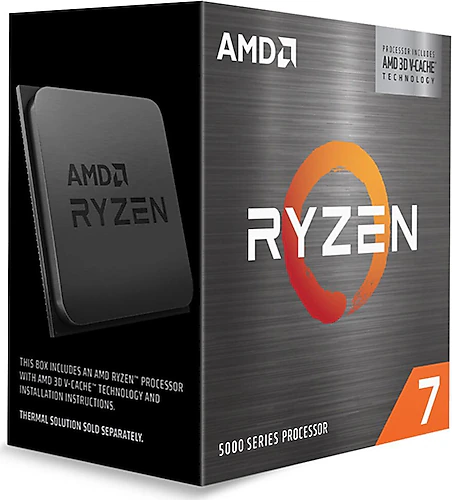
The AMD Ryzen 7 5800X3D is an eight-core processor that fits AM4 desktop systems; what truly sets it apart from a standard Ryzen 7 upgrade is its 3D V-Cache. Its 96 MB of L3 cache makes it a strong choice, especially in CPU-intensive games. It remains a compelling option for anyone looking to refresh their gaming PC without replacing their existing motherboard or DDR4 memory.
Cache that makes a difference in games
The 5800X3D’s 8 cores and 16 threads start at a base frequency of 3.40 GHz and can reach up to 4.5 GHz under suitable workloads. However, evaluating this model based on clock speeds alone would miss the point: the large L3 cache provided by 3D V-Cache can help the processor access the data it needs more quickly while gaming. The benefit varies depending on the game, graphics card, and resolution; it can be significant in games where high frame rates matter and the CPU is close to becoming a bottleneck.
That’s why the 5800X3D appeals to gamers using a powerful graphics card with a high-refresh-rate monitor at 1080p or 1440p. At higher resolutions, the load often shifts to the graphics card, so the impact of a processor upgrade may diminish from game to game. In other words, this upgrade makes more sense for users who consider their system’s bottlenecks and the games they play, rather than simply looking for a “faster processor.”
For those who want to keep their AM4 system
A key advantage of this processor is that it can upgrade an existing AM4 computer without the cost of moving to a new platform. Having an AM4 socket on your motherboard may not be enough on its own; a BIOS update may be required for it to recognize the processor. Before buying, check the motherboard manufacturer’s CPU support list and the required BIOS version. Also make sure your cooler, case airflow, and power supply are suitable for the rest of your system.
It uses DDR4 memory; the supported memory speed is listed as 3200 MHz, and the maximum capacity as 128 GB. Keeping your existing DDR4 kit can help you avoid the expense of a new motherboard and memory. PCIe 4.0 support is also available with compatible motherboards and components; this doesn’t mean every installed SSD will automatically run at PCIe 4.0 speeds. The motherboard’s M.2 slot and support from other components matter too.
Uses beyond gaming
Alongside gaming, 8 cores and 16 threads are useful for streaming, multitasking, photo editing, and various content-creation tasks. The processor also supports virtualization, so it can be considered for running virtual machines on compatible systems. That said, the 5800X3D’s standout feature isn’t class-leading processing power in every workload, but its specific contribution to gaming performance. If intensive, long-running multithreaded production work is your priority, it’s worth comparing application performance with alternatives in the same price range.
One more setup note: the 5800X3D has no integrated graphics. You’ll need a separate graphics card to get a display output; before replacing your graphics card, check which component currently provides video output in your system. The processor’s 105 W power class also means cooling shouldn’t be overlooked. A suitable CPU cooler and adequate airflow through the case help keep the system stable under load.
How it differs from its competitors
Compared with the Ryzen 7 5800X, the key difference is the 5800X3D’s much larger L3 cache and the advantage it can provide in games. On the other hand, this model isn’t suited to the conventional approach of freely overclocking through the multiplier; its tuning options are more limited. Although the product listing shows an overclocking feature, you shouldn’t base your purchase decision on expectations of pushing the processor to high frequencies.
The Ryzen 7 5700X3D is another close alternative for those looking for AM4 and 3D V-Cache. The current price difference and gaming performance comparison may determine which one to choose. Those building a new system can also consider a newer platform such as the AM5-based Ryzen 7 7800X3D, but this option requires replacing the motherboard and memory. The 5800X3D’s meaningful advantage is that it offers a gaming-focused leap while avoiding those expenses on an existing AM4 system.
Who should consider it?
The Ryzen 7 5800X3D is a strong upgrade candidate for users who already have an AM4 motherboard, DDR4 memory, and a graphics card—especially those whose gaming performance is limited by the processor. The extra cost for 3D V-Cache makes sense if the price remains favorable compared with the cost of moving to a new platform. Those building a computer from scratch or mainly doing multithreaded production work should compare current platforms and competing processors before deciding.