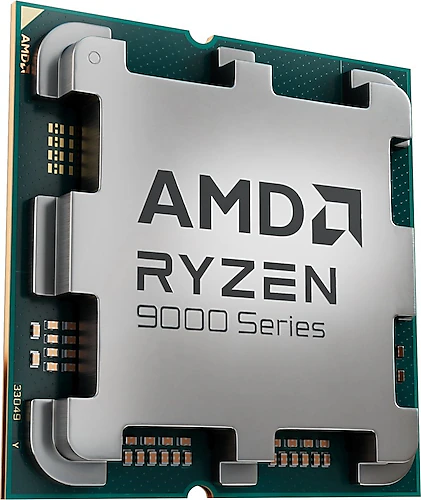
The AMD Ryzen 7 9800X3D is a desktop processor focused on CPU performance in games. With eight cores and 16 threads, 96 MB of cache, and boost speeds of up to 5.2 GHz, it is aimed especially at systems targeting high frame rates. It uses DDR5 memory on the AM5 platform, but this tray version is sold without a cooler, which must be purchased separately.
Designed for gaming performance
The 9800X3D’s most distinctive feature is its 96 MB of cache. A large cache can help the processor access the data it needs during gameplay more quickly, contributing to high and more consistent frame rates in CPU-intensive games. The impact varies from game to game: the difference may be smaller at high resolutions and detail settings where the graphics card is the limiting factor. Players targeting higher frame rates with a powerful graphics card may get more value from investing in the processor.
That makes the 9800X3D a good fit not just for people looking for an “eight-core processor,” but for those building a system that can keep a graphics card fed and improve the gaming experience on the CPU side, too. It stands out for anyone who wants to make the most of a high-refresh-rate monitor in competitive games, maintain frame rates in CPU-intensive gameplay, or build a gaming PC that will stay current for a long time.
Is it useful beyond gaming?
Eight cores and 16 threads mean the processor is not limited to gaming. It offers enough multitasking headroom for tasks such as gaming while streaming, everyday productivity, keeping many applications open at once, and mid-sized content creation projects. Virtualization support is also useful for people working with virtual machines. That said, if your workload mainly consists of long rendering sessions, large-scale compilations, or intensive professional production, it makes sense to compare processors with more cores as well. The main reason to buy the 9800X3D is not to maximize core count for general-purpose work, but to combine strong gaming performance with versatile desktop use.
What to consider when building an AM5 system
The processor requires an AM5 motherboard and DDR5 memory. If your current computer uses an older socket or DDR4 memory, replacing the processor alone may not be enough; factor in the cost of a motherboard and memory as well. If you are building an AM5-based system, you can choose a motherboard based on your connectivity needs and other components. The processor’s PCIe 5.0 support also opens the door to next-generation connectivity with compatible motherboards and components; it does not mean that every installed PCIe device will automatically run at PCIe 5.0 speeds.
The “cooler not included” description is an important detail when buying this product: there is no CPU cooler in the box. For this model, which has a stated power consumption of 120 W, you will need to choose a cooler suited to your case layout and usage. If you plan to reuse your existing cooler, check AM5 compatibility and available space in your case. Also, since the 9800X3D is aimed at high-frame-rate gaming systems, plan your graphics card, power supply, and case airflow as part of the overall build.
How it differs from its competitors
Compared with previous-generation X3D processors such as the Ryzen 7 7800X3D, the 9800X3D’s appeal lies in combining a newer-generation design with high clock speeds and a large gaming-focused cache. The generational difference alone does not promise gains of the same magnitude in every game; when choosing, consider the games you play, your graphics card, and the total system cost of both processors together. If the 7800X3D is significantly more affordable, it is especially important to weigh what the price difference would mean for your games and monitor setup.
Processors with more cores in a similar price range may have an advantage in demanding multithreaded production tasks. The 9800X3D, in contrast, is a more direct fit for users whose clear priority is gaming. So your processor choice should not depend on core count alone: if gaming performance comes first, the X3D approach makes sense; if workstation tasks dominate, consider alternatives that prioritize core count and application performance.
When does the price make sense?
Without a specific price, it is not possible to make a definitive price-to-performance ranking. The 9800X3D may be worth the price difference for someone who games with a powerful graphics card and a high-refresh-rate display and wants to reduce CPU bottlenecks in their system. If you use a more modest graphics card or the graphics card is the main limitation in your games, investing in components such as the graphics card or cooler instead of putting more money toward the processor may give you a more balanced result.
In short, if gaming is your clear priority and you are prepared to cover the total cost of an AM5 system, including a cooler, the Ryzen 7 9800X3D is a strong contender. Those who prioritize multicore production work or want to distribute their budget more evenly should compare alternative processors and platform costs.